




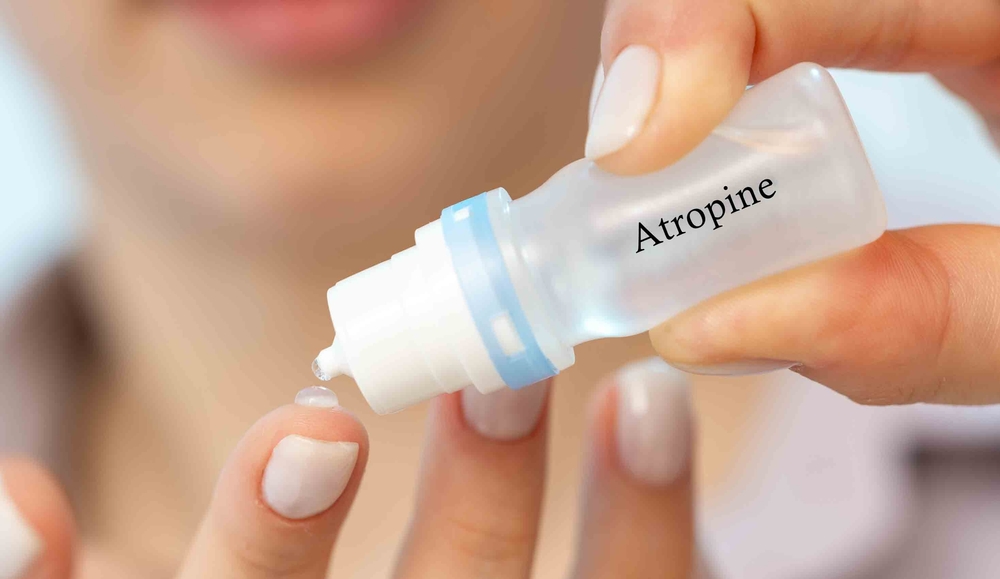
Myopia management is about more than updating a child’s glasses prescription. It focuses on slowing the progression of nearsightedness over time, which may help reduce the risk of future eye health complications associated with higher levels of myopia. One of the most widely discussed treatment options is atropine eye drops.
For families researching myopia management, atropine stands out because it is simple to use, non-surgical, and often well suited for children. At Fulshear Eye Center, this type of treatment can be part of a broader plan to help protect long-term vision.
How Atropine Eye Drops Work
Atropine eye drops are used in very low concentrations for myopia control. While researchers continue to study every detail of how atropine slows myopia progression, the current understanding is that it affects biochemical signals involved in how the eye grows.
Myopia usually worsens when the eye becomes too long from front to back. Low-dose atropine is used to help slow that elongation. Rather than correcting blurry distance vision on its own, the drops are intended to manage the rate of change, which is why they are often paired with glasses or contact lenses.
Why Slowing Myopia Progression Matters
Children with progressing myopia may need stronger prescriptions year after year. Beyond the inconvenience of changing eyewear more often, higher myopia can be linked to greater long-term risk for certain eye conditions later in life.
That is why early myopia management is so important. A proactive approach may help preserve healthier vision over time and give families a clearer strategy than simply waiting for prescriptions to worsen.
Why Low-Dose Atropine Has Gained Attention
Low-dose atropine has become popular because it offers a balance of effectiveness and tolerability. Higher concentrations of atropine may cause more noticeable light sensitivity or blurred near vision, while low-dose options are typically chosen to reduce those effects.
This makes treatment more manageable for many school-age children. Since the drops are usually used once daily, they can also fit more easily into a family’s routine.
What a Myopia Management Plan May Include
Atropine is often only one part of a personalized care plan. A child’s age, prescription history, rate of progression, visual habits, and eye health all help guide treatment recommendations.
A myopia management evaluation may include:
Measuring current prescription and eye growth patterns
Reviewing family history and lifestyle factors
Monitoring how quickly nearsightedness is progressing
Determining whether atropine is a good fit
Planning regular follow-up visits to track results
Ongoing Monitoring Is Part of the Science
Successful myopia management is not a one-time treatment. It requires routine follow-up to evaluate whether the child’s vision is stabilizing and whether the treatment plan should be adjusted. This ongoing monitoring is part of what makes the process evidence-based and individualized.
For parents, that means having a clearer understanding of how treatment is performing instead of simply reacting to stronger prescriptions each year.
Contact Fulshear Eye Center at 29807 Jordan Crossing Blvd. #600, Katy, TX 77494, for expert guidance on atropine eye drops and myopia management by calling (832) 571-2020.